
After a storm the instinct is to get everything fixed as fast as possible. That instinct is right about safety and wrong about everything else, because the order you do things in can affect whether an insurance claim is straightforward or difficult.
First: make it safe
If water is coming in, stop it. Temporary measures are expected and are not held against you. Move what you can out of the way, contain what you cannot, and keep the receipts for anything you buy or pay for.
Second: document before you repair
This is the step people skip. Photograph everything before any permanent work is done, from a distance and close up, inside and out. Once a repair has been completed, the evidence of what was wrong has gone with it.
Temporary make-safe work is fine. Permanent repairs before documentation are what cause problems.
Third: report it to your insurer
Policies carry time limits for reporting. Do not sit on it while you decide whether to claim. Reporting is not the same as committing.
Fourth: get the roof assessed
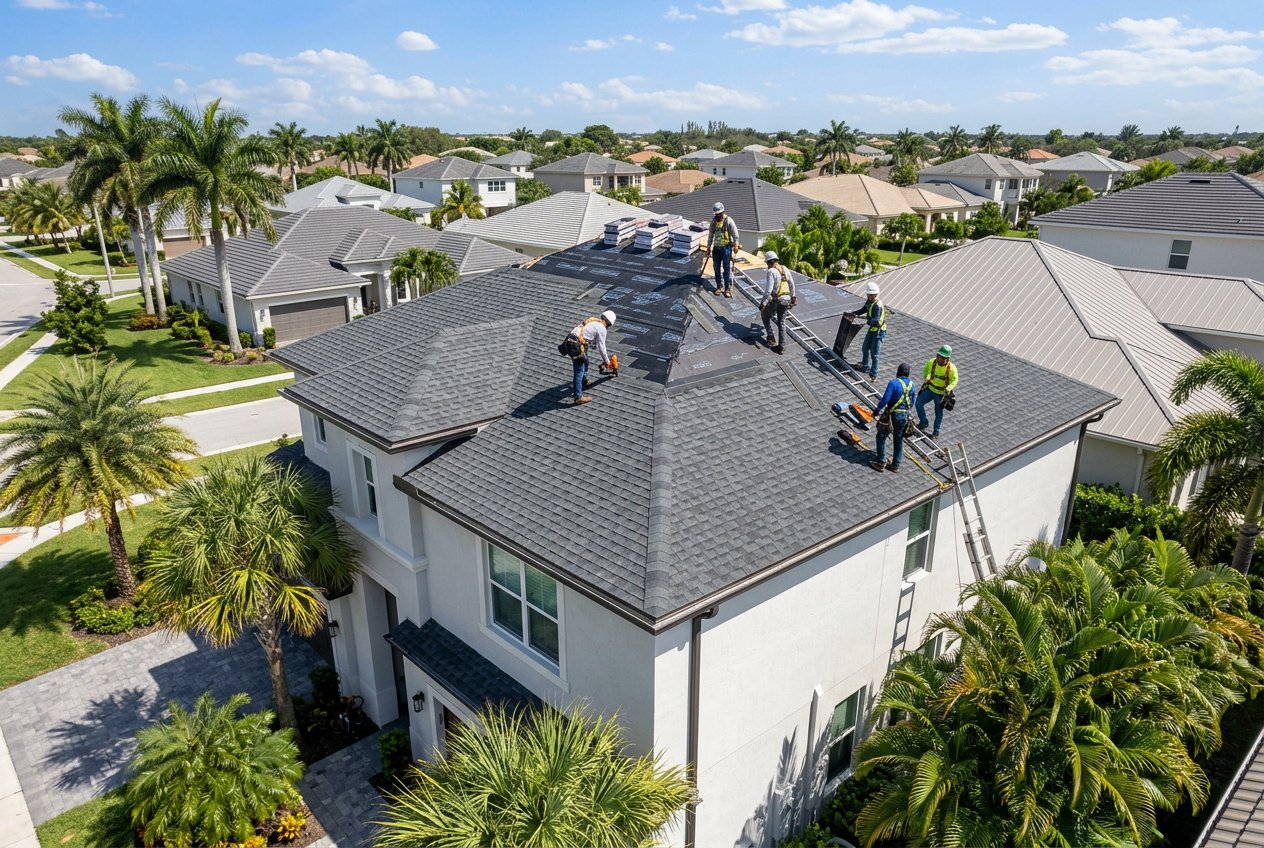
An insurer wants to see what is damaged and what it will take to put right. That means a proper inspection, a photographic record and a written scope of works. This is the part most homeowners find hardest to produce on their own, and it is the part a roofer can actually help with.
A word on who does what
Roofers inspect roofs and write scopes. Public adjusters and attorneys handle claims. Anyone who tells you before an inspection that your claim will definitely be approved is guessing, and you should treat that as a warning rather than a reassurance.
If you have had storm damage and have not had the roof looked at, an inspection will at least tell you whether there is anything to claim for.
An inspection costs nothing and you get the findings in writing either way.
Request a Roof Inspection